





The Primacy of the People
We trust in the institution of government, a government that is, in the end, made up of all of us, all of the people, a government that creates the law by which we agree to be governed.
Channelling is an important element of the tax system. We have no other way of rewarding – therefore, encouraging – good behavior. And we can’t punish – therefore, discourage – bad behavior except by making it illegal, and our Constitution and other rights often prevent us from doing that.
This cannot be our legacy. Our children deserve better. Future generations must have time to invent, to innovate, and to thrive. We have a duty to uplift our children and our grandchildren. Our legacy to our children must be a fertile world that encourages exploration, shares discoveries, expands each other’s universe, and grows our democracy. We have a duty.
But there’s no need to stop canvassing. Perhaps it’ll be less formal than a campaign might canvass – no mobile app, no careful selection of which doors to knock and which to skip, no glossy door-hangers to leave behind. But canvassing is a formalized version of that most basic political act – talking.
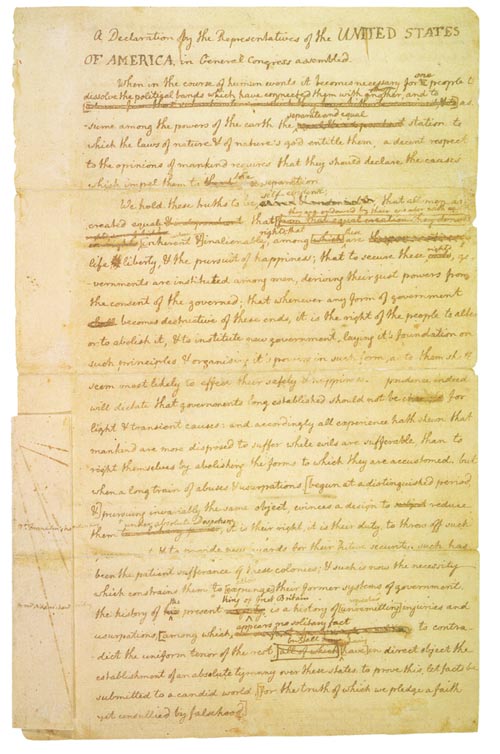
A favorite quotation from American founding documents is this partial quote: “We, the people.” Taken from the Preamble (and thus the first words) of the U.S. Constitution, “We, the people” is meant to illustrate the primacy of the people of the United States over other powers, especially the powers of the government formed by that same Constitution.
But this reading misses the mark. I take those opening words to reflect that the people and the government are one and the same.
This seems like an important point in the discussion of 2nd Amendment rights. It is also an important point in many other aspects of how the people and the government relate to one another. And understanding that point drives many of the policies we operate under, and advocate for or against, today.
If we hold that “the government” is some entity that exists outside of, separate from, and in enmity against, the people, then many of the policies of the Republican party follow quite naturally.
Burke’s book was a great introduction, for me, to the central tenets of the Deadhead community – that sense of sharing, of helping one another, of finding your place within the world around you, and of keeping that place intact against the familiar pressures of everyday living.
More than just a story – though certainly an interesting and entertaining story – F.T. Burke’s “The Bohemian Adventure” shows us how we can grow, even in middle age, to re-center ourselves into a sense of purpose and value. That value isn’t found in ourselves as solitary individuals, but in the community of like-minded people, sharing among that community.
There’s money to be made, and there are jobs to be created, by imprisoning people. And there are many private, for-profit companies feeding at that trough.
Is that a Michigan Value?
Everybody on one side says everybody on the other side hates Donald Trump.
No, I don’t hate him.
To be most charitable, I don’t care about him enough to hate him. I know other people who are crude or selfish or conceited or overbearing or loud or crass or ignorant. I’ve responded by ignoring them.
No, I don’t hate Trump. But I do hate – wait, let me think… yes, I do hate what he has been doing.
In liberal views, if people donʻt benefit – if wages donʻt go up with productivity, if houses arenʻt affordable, if medical bankruptcies are rising, if school debt is crushing, if lives are lost – then the economy is failing.
We all remember that kid — the one on the playground who threw a tantrum when he lost. You called him a “Sore Loser”. And even though you were just kids, you knew — everyone knew — that nobody likes a sore loser. The Republican Party is the party of sore losers.